The Problem
A company in financial distress rarely recovers in a straight line. More often, restructuring is a process of repeated course corrections each requiring fresh capital. For banks and other lenders, this creates a difficult dilemma: continue supporting a struggling borrower in the hope of recovery, or pull back and risk triggering the very collapse everyone is trying to avoid.
In Germany, this dilemma carries significant legal exposure. Each time a lender extends further credit to a borrower that is already in crisis, it runs the risk of being accused of delaying an inevitable insolvency and of having caused harm to other creditors who might have been better off had the company filed earlier. The question is not whether to support restructuring, but how to do so without crossing the line into liability.
How German Law approaches restructuring finance
The role of the restructuring opinion
German restructuring practice places considerable weight on independent expert assessments, typically referred to as restructuring opinions or independent business reviews (IBRs or “IDW S6”). These reports do more than diagnose a company’s problems; they set out a concrete pathway to recovery, including the specific milestones the business must hit. If the company follows the plan and achieves its targets, the restructuring is deemed successful. If it does not, questions arise about whether the rescue attempt was ever viable and whether continuing to fund it was justified.
Three levels of lender involvement
German courts distinguish between three forms of restructuring support, each with different expectations attached:
Standstill: The lender simply refrains from calling in existing debts. No restructuring opinion is required at this stage. The lender is not providing new money, only time.
Bridging finance: Short-term liquidity support to keep the business running while a restructuring opinion is being prepared. The lender needs confirmation that the company can be funded through this interim period, but no full recovery plan is required yet. The test is simply that the rescue attempt is not ‘obviously hopeless’.
Full restructuring loan: Longer-term financing to support the execution of a restructuring plan. This requires a coherent restructuring opinion, grounded in the company’s actual circumstances, which has begun to be implemented and offers a credible prospect of success.
Where liability arises
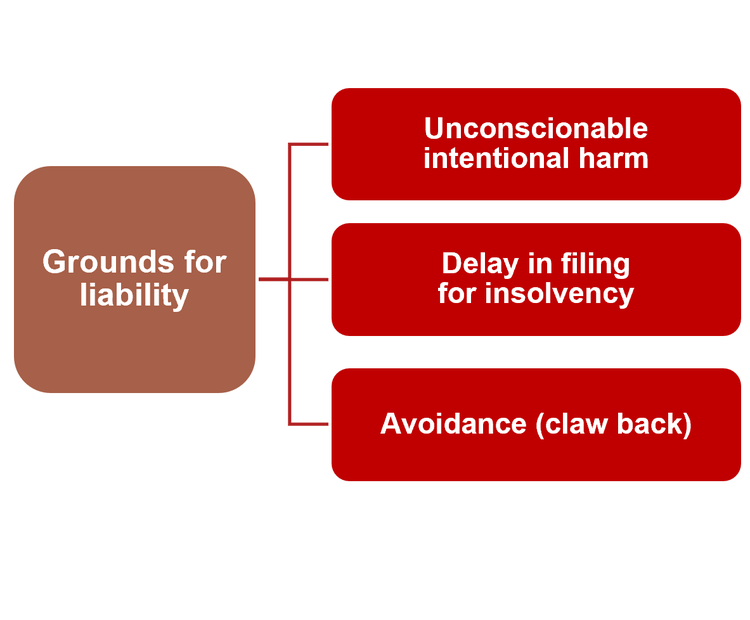
When restructuring support goes wrong, lenders face exposure on two main fronts:
Claims for intentional harm to creditors: Under German civil law, a lender can be held liable if it deliberately prolongs a company’s life through inadequate funding, essentially keeping the patient alive just long enough to improve its own position while other creditors suffer. The classic scenario is a bank that provides just enough capital to buy time to obtain additional security or to allow limitation periods on earlier transactions to expire.
Liability for delayed insolvency filings: German law imposes a duty on company directors to file for insolvency once certain thresholds are crossed. A lender that exercises significant influence over management decisions may find itself caught by these same rules, particularly if its involvement is seen as having caused the company to postpone the inevitable.
Beyond these direct claims, lenders also face the risk of having payments clawed back by an insolvency administrator. Transactions in the run-up to insolvency – particularly those made when the lender knew or should have known the borrower was in trouble – can be unwound, with exposure extending back up to four years in cases of intentional creditor prejudice.
The gravest risk, however, lies in third-party creditor claims. If a lender continues funding a company when the restructuring has objectively failed, it may be held liable to other creditors who suffered losses as a result of the delayed collapse. The central question in any such case is whether the lender’s support genuinely aimed at recovery or whether it was simply buying time for its own benefit.
The protective role of restructuring opinions
A lender that relies in good faith on an independent restructuring opinion is generally protected from liability. The logic is straightforward: if an impartial expert with sector knowledge has concluded that the company can be saved, the lender should not be second-guessed for acting on that advice. But this protection has limits. Where a lender has its own information suggesting the expert’s conclusions are flawed or where repeated failures to meet milestones make the opinion’s assumptions obviously unrealistic, the lender can no longer hide behind the expert’s assessment. At that point, the lender must apply its own critical judgement and may need to commission additional independent analysis.
Practical steps to manage the risk
Given the risks, how should lenders approach requests for continued restructuring support? The following principles can help reduce exposure:
For every extension or new money advance, ensure:
- Full funding is confirmed for the relevant period. The company must not run out of cash before the next decision point.
- The new money is strictly earmarked for restructuring purposes, not for servicing unrelated obligations or paying down the lender’s own exposure.
- The lender has a reasonable basis to believe the restructuring is not obviously doomed to fail.
- The lender is not using the extension to improve its own recovery position at the expense of other creditors.
Where the borrower has already missed previous milestones, additional discipline is required:
- Do not rely blindly on the restructuring expert. Where prior assumptions have proved wrong, the lender must conduct its own critical assessment of whether the new plan is realistic.
- Document every decision thoroughly. The rationale for continuing or terminating support should be recorded clearly, including the underlying facts, expert advice received, and the lender’s own risk assessment.
- Build in hard milestones with clear exit rights. Extensions should be tied to specific, objectively measurable targets, e.g. signing an M&A transaction by a certain date, hitting an EBITDA threshold, or achieving other concrete goals. If these are missed, the lender should have an unambiguous right to terminate.
- Structure the support conservatively. Standstill agreements should have defined time limits. Fresh money should carry super-senior status where possible. Extension periods should be measured rather than generous.
The Bigger Picture
The core message is simple: every extension of restructuring finance increases the lender’s exposure. The question a lender must always be able to answer is whether continued support improves – or at least does not worsen – the position of all creditors. If it does, the lender has a defensible rationale. If it does not, the lender may be crossing into liability territory.
This calculus is only becoming more demanding. Germany’s preventive restructuring framework, introduced under the StaRUG legislation, has raised expectations around early intervention and structured dialogue between debtors and creditors. Courts and insolvency administrators are increasingly sophisticated in scrutinising lender conduct, and the standards for what counts as good-faith support continue to tighten.
For lenders navigating this landscape, the practical steps outlined above offer a starting point, but they are not a substitute for careful, case-specific analysis. The stakes are high, the legal terrain is complex, and the margin for error is narrow. Getting it right requires not just legal knowledge, but commercial judgement and a willingness to engage early.