
Publication
Navigating international trade and tariffs
Impacts of evolving trade regulations and compliance risks


Global | Publication | November 2025
In 2017, the Basel Committee on Banking Supervision finalised the last major piece of its post crisis reforms, often referred to as Basel 3.1. These reforms introduced updated standards for calculating capital requirements for credit risk, credit valuation adjustment (CVA) risk and operational risk. They also set out a revised leverage ratio, a leverage ratio buffer for global systemically important banks, and an “output floor” based on strengthened standardised approaches, which limits how far internal models can reduce risk based capital requirements.
A central aim of these changes is to curb the excessive variability of risk weighted assets (RWAs). During the global financial crisis, confidence in reported risk weighted capital ratios eroded among investors, supervisors and other stakeholders. The revisions are designed to restore credibility by making the standardised approaches for credit and operational risk more robust and risk sensitive, tightening the use of internal models, and reinforcing the risk based framework with a stronger leverage ratio and a binding output floor.
In addition, for the European jurisdictions we added one further topical question outside of Basel 3.1 which asks for an update regarding the implementation of the Capital Requirements Directive VI’s supervisory framework for branches of third-countries.



























Publication
Impacts of evolving trade regulations and compliance risks
Publication
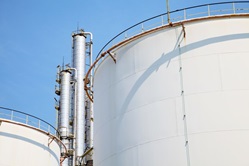
Low carbon projects, especially those involving hydrogen and carbon capture and storage (CCS), play a crucial role in the journey towards global decarbonization.
Publication
As a general remark, Indonesia has not, at the date of preparing this summary, issued any regulation on hydrogen production, distribution and trade. It is expected that the upcoming New and Renewable Energy Law will provide a legal framework for the exploitation and utilisation of various new energy sources, including hydrogen.
Subscribe and stay up to date with the latest legal news, information and events . . .
© Norton Rose Fulbright LLP 2025