


Publication
Vietnam’s shift to capacity and energy pricing: What the two component tariff means
The two-component tariff has been mandated in Vietnam pursuant to Article 50 of the amended Electricity Law 2024 and Government Decree 146/2025/ NĐ-CP.


Australia | Publication | December 2019
When it comes to questions of reputation in the workplace, the shadow of the Hayne Royal Commission hangs heavy over major Australian organisations.
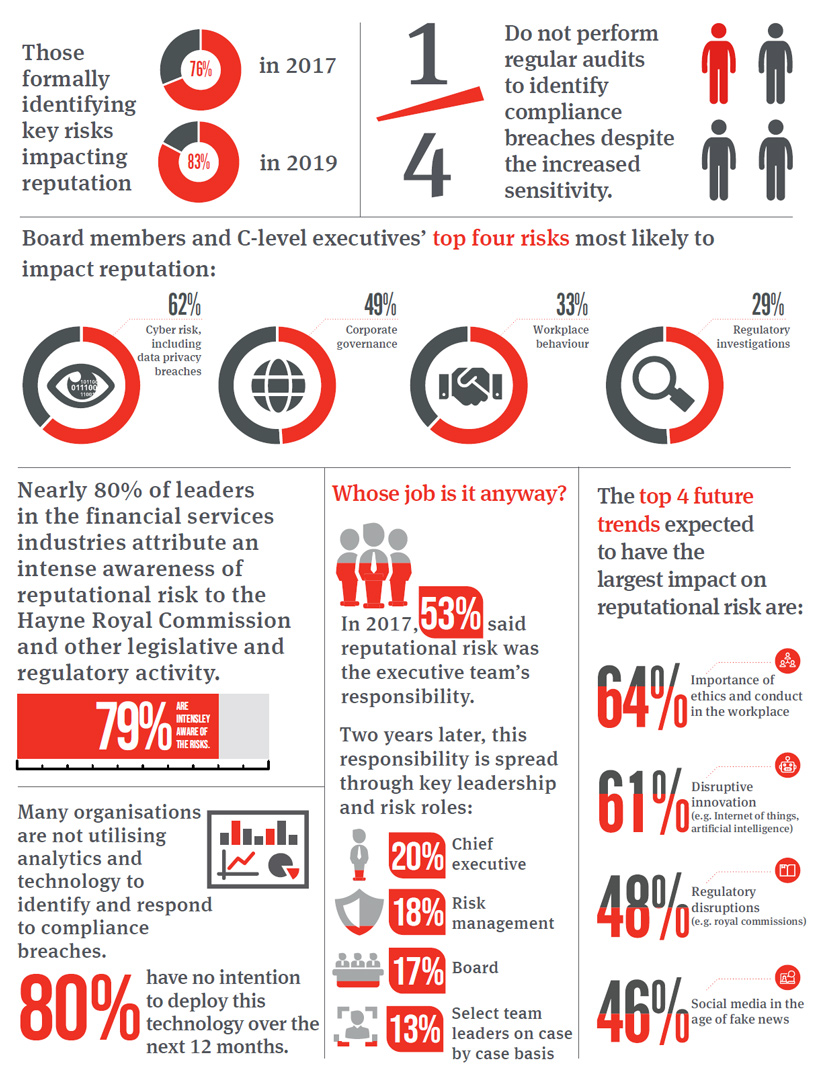
In the year of Hayne’s landmark report on the conduct of Australian financial institutions, measuring, assessing and improving workplace culture has taken on new urgency and heightened feelings of exposure to reputational risk issues.
Norton Rose Fulbright surveyed 132 leaders across business and government between August and September 2019 to further its understanding of what reputational risk means to today’s organisations. The results of this research, taken together with the views gathered in our inaugural Reputational Risk Australia report in 2017, are detailed in this report.
The results clearly show a growing intensity of concern about workplace reputational issues. Major organisations are becoming both more sensitive to reputational risk and more willing to identify its key drivers.
To find out more about what reputational risk means to Australian organisations and benchmark your business against your peers, read our full report.
For more information, contact one of our employment and labour and risk advisory experts below.
Publication
The two-component tariff has been mandated in Vietnam pursuant to Article 50 of the amended Electricity Law 2024 and Government Decree 146/2025/ NĐ-CP.

Publication
Since the 2024 amendments to Ontario’s Construction Act under Schedule 4 of Bill 216 (Building Ontario For You Act (Budget Measures), 2024) received royal assent, project owners and construction companies have been holding their breath for the amendments to come into force.

Publication
The Sustainable Harnessing and Advancement of Nuclear Energy Act, 2025 (the SHANTI Act) came into effect in India on 21 December 2025. The SHANTI Act is the most sweeping reform of India’s nuclear regime to date, repealing the previously existing Atomic Energy Act, 1962 and the Civil Liability for Nuclear Damage Act, 2010 (CLND Act).
Subscribe and stay up to date with the latest legal news, information and events . . .
© Norton Rose Fulbright LLP 2026